Search This Blog

Friday, August 24, 2012

Wild Rose Honey, Golden Angels Apiary, Singers Glen, VA

My family did a road trip to the DC region recently and I picked up this wild rose honey at a local organic supermarket near Ellicott City, MD. It is produced by Golden Angels Apiary in Singers Glen, VA.

From a websearch I discovered that Dennis and Neva Whetzel are behind Golden Angels Apiary, and they produce a variety of honeys including: wild rose, clover, wildflower, tulip poplar, sourwood, thistle, and orange blossom.
 
Singers Glen, Virginia is a small, rural village with about 2500 residents located in the western part of Rockingham County in the Shenandoah Valley, 8 miles west of Harrisonburg, and also west of the Blue Ridge Mountains. It is basically one road, the Singers Glen Road, where you can find the post office, a recycling center, the Singers Glen school, the volunteer fire department, a few stores, and the Methodist and Baptist churches.

 
It was founded in 1804 when Joseph Funk, originally from Pennsylvania and the grandson of the first Mennonite Bishop of the United States (Henry Funck), built a log house there along with other descendents of the German Anabaptists who were persecuted during the European Wars of Religion. The community was originally called Mountain Valley but was renamed Singers Glen in 1860 when it got its first post office. Its claim to fame, and the reason its being a registered historic settlement, is that Joseph Funk printed and published the "Harmonica Sacra" in Singers Glen in 1847, a classic Mennonite hymnal that is still in use and in print today. As such Singers Glen is credited with being the birthplace of Southern Gospel music. Mr. Funk also started a singing school at Singers Glen and began training young men of "high moral character." Of interest, and perhaps in keeping with producing young men of high moral character, Singers Glen has more churches than commercial establishments, but if the truth be told, this may be due mostly to the lack of commercial establishments.  Also of interest, but mostly for archers, Singers Glen has a well established and family friendly archery club, the Bowbenders club: http://www.singersglenbowbenders.com/


The area surrounding Singers Glen is described as "beautifully scenic" and it isn't hard to see why.


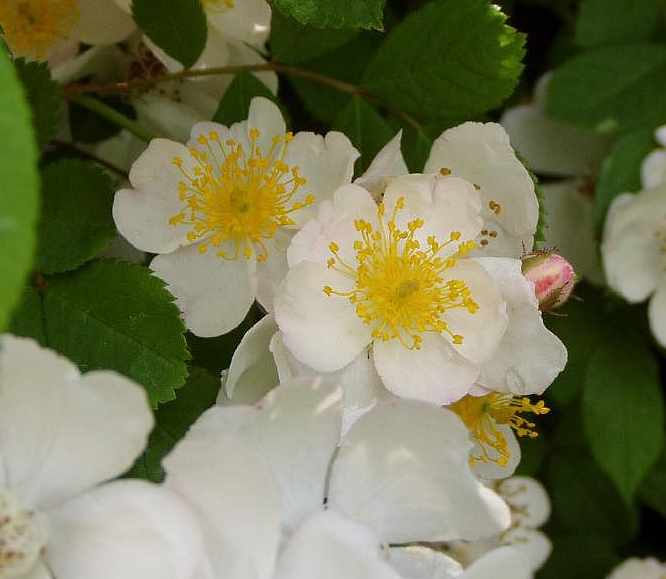
The honey I have is wild rose. Wild rose actually refers to a variety of flowering shrubs including Rosa acicularis, Rosa arkansana, and Rosa virginiana (among others). Unfortunately the Golden Angels Apiary doesn't have a website, and I couldn't find out any more information about their production of their flower sources.


It is a clear, mellow orange-yellow honey with a very thin consistency. I was expecting (and hoping) for a floral rose flavor, but instead got a simple, strong, honey sweetness with no obvious floral or other undertones. Its flavor is consistent throughout with no changes in after taste.It is a good quality honey that offers honest to goodness honey taste. After repeated tastings I think I taste a very subtle molasses-black licorice flavor near the end, but it is VERY subtle and it may just be my imagination. This honey would do well in tea, in baking or anywhere else you need a robust honey taste.


Thursday, August 2, 2012

Wildflower honey (fleurs sauvages), Api M.D., Mansonville, Québec, Canada

No visit is complete when we visit my in-laws' cottage on lake Memphramagog in the Eastern Townships of Québec without a walk to Jewett's store. The cottage is in Vale Perkins, which, as far as I can tell, means it is within walking distance of Jewett's. There isn't any semblance of a town or anything called Vale Perkins. There is no sign "entering" Vale Perkins. It is just a dot on a map that corresponds to the crossroads where you'll find Jewett's store. It is too bad the town isn't called Jewett's because then it would be less confusing.

Jewett's is a common name in the region. As you make your way from Mansonville (the closest real town with a post office and everything) to Vale Perkins you pass quite a few farms owned by different Jewett's. I know that when I start seeing wooden signs with the name Jewett's on them I'm not far from the lake or the cottage. 

Jewett's store is a sight to behold and well worth the walk, even on a sweltering, hot day. Although their stock may have changed over the years, the store probably hasn't since before the beginning of time. It is a throwback to dry goods stores in the wild west. The floors are made of weathered wide-planked oak and creak when you walk on them. Shelves line every wall, and every nook is full of something. It is a testimony to efficient use of space. They have it all: from fresh eggs, to local cheeses, cake mixes, snorkels and fireworks. If Jewett's doesn't have it, you probably don't need it.

This past visit, on the road to Vale Perkins, I noticed bee hives (see below). When I did my pilgrimage to Jewett's I asked about them and Ms. Jewett showed me a shelf behind the cash where they stock local honey, saying she had some of it for sale. I picked wild flower. [There were a few other varieties but I'll save them for future visits.]


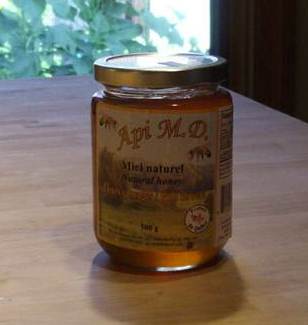
The apiarist is "Api M.D." and apart from saying the honey is wildflower, a product of Québec and out of Mansonville, the label doesn't give any other information. I searched online to get more but came up empty.

On a hike in the area, I looked for wildflowers. Here is what I found. Don't ask me if I know the names of anything, I don't. On a few flowers I saw honey bees, so it looks like I was in the right place.


The honey itself is a very runny, clear, slightly orange honey. It is very thin and takes a bit of effort to get any to stay on a toothpick long enough to sample. It has a very smooth taste. It is very sweet and has a floral undertone, and then it melts and is gone. There are no complicated flavors, it is just pure throughout. If you need a very runny honey- to spread on something or drip into tea, this is a good choice. The flavor is subtle and may add to an herbal tea (like camomile) but won't overpower whatever you add it to. As far as I know you can only get it at Jewett's store; take note: it is on a shelf, behind the cash in the front.


On this visit to Jewett's I also got another honey from "Cousin Bob" in Ontario (a cousin of the Jewett's who has a bed and breakfast and apiary). In the same time frame I was asked by a fellow blogger, and honey-phile, Elizabeth Gowing if I might like to guest blog on her site. She is an intrepid writer, traveler, beekeeper, and adventurer, and I couldn't say yes to her fast enough (!) She showcases honey and honey recipes and I used Bob's honey (a very good quality table honey) in a comforting tea recipe from Najmieh Batmanglij’s wonderful cookbook “Silk Road Cooking, A Vegetarian Journey.” Check out Elizabeth's blog, 100 days of honey and see my guest blog spot. Be prepared for some exotic honey recipes!


Saturday, July 14, 2012

(Loquat?) Peruvian Market Honey, Cusco, Peru

My friend Ronna recently went to Peru on a family vacation and she brought me back honey she bought in a local market in Cusco, or Cuzco? or Cozco? or Quesqu? or Qosqo?- it is hard to know how to spell it. According to wiki, the aboriginal name for the city is Quesqu. The Spanish conquistadors altered the local name to Cuzco or Cozco, and Cuzco was the 'official spelling' until 1976 when the mayor banned this spelling and mandated that "Cusco" be used instead. Then in 1990, other local officials authorized a new spelling: Qosqo. Egads, what is going on? And what are we poor mortals to do when referring to this lovely city? So as not to be too confusing, I will use the name that is listed on the map I found of Peru, Cusco. I hope I'm not offending anyone.


Cusco is a city of about 350,000 in southeastern Peru, near the Urubamba Valley of the Andes mountain range. It is the capitol of the Cusco region as well as the Cuzco province, and is also the historical capitol of the Inca Empire. It was declared a World Heritage Site in 1983 by UNESCO.

From about 900- 1200 the Killke occupied the region, and they were followed by the Incas (1300s-1532). Then, between 1527-1536, Cusco was controlled by many different rulers. In 1527 Huayna Capac died and his empire was divided, and the city fell under the control of Huáscar. It was then captured by the generals of Atahualpa in 1532 (Battle of Quipaipan), and a year and a half later Spaniards captured it (in the Battle of Cuzco)- renaming it to Cuzco in the process. In 1536 it was briefly (a few days) retaken by Manco Inca Yupanqui during the Siege of Cuzco. The Spanish then reclaimed it more permanently, and it became the center of Spanish colonization. Then, much later in 1821, Peru declared independence. Cusco was made the capitol of the new department of Cuzco, and has since become the most important city in the southeastern Andean region.


Oops- I almost forgot to mention that Cusco was also used as the base for the expedition of Hiram Bingham in 1911 to find Machu Picchu, which is why it is now a major tourist destination (and why my friend Ronna found herself in the market of Cusco looking for honey).

Cusco has a subtropical highland climate. It is generally dry and temperate, with a dry season (April to October) and a wet season (November to March). A bit of trivia:
In 2006 Cusco was found to have the highest ultraviolet light level on Earth.

I (and Ronna) have no idea what kind of honey she bought. It came in a small plastic cup with a lid, and no label. She bought it from a crowded market stall in the large local market from a fellow who could only say that it was local and produced by native Peruvians. She did take a photo of the fellow and his stall- but this is all I have to go on (see below).


I found one site that gave information about Peruvian honey production [http://www.apiservices.com/articles/us/fert/incas.htm]. According to the site, most honey is produced in the Amazon rainforest region. In fact, honey production is being promoted in this area as an alternative to growing coca crops, the source of cocaine. In the plateau region, where Cusco is, there is also honey production, but it is generally a smaller, family operation, with a family having a few hives to make some extra money. These small, family outfits are organized as micro-cooperatives and are mainly run by women. It seems that given the climate and floral sources available, honey production has real potential in the area, but poor road conditions hinder moving bees around.

Of interest, before Europeans arrived, there were no honey bees (Apis mellifera) in the Americas, but there was beekeeping and honey. The honey was produced by a small, stingless bee called mellipona. Some Peruvians continue to gather honey from this local bee, called 'palo honey.'

The usual floral sources for honey in Peru are: carob trees, cotton plants, Eucalyptus, tangerine trees, mango trees, orange trees, and loquat trees (also known as Japanese medlar). I wasn't familiar with loquat trees or fruit, and found out that the fruit is very sweet and tastes like a cross between passion fruit and a guava.


But back to the honey that Ronna got me. It is a very thin, clear and runny honey. It has a clear, mellow honey color. In fact, just looking at it I would say it looks a lot like clover honey, but maybe a bit runnier. The first clue that it is NOT a run of the mill table honey, though, is the smell. It smells like pineapple(!) And the taste is so unexpected- It has an INCREDIBLE exotic, fruity taste. It is like a mix of pineapple and papaya or maybe mango- or maybe loquat? I've never tasted a loquat, so I can't be sure, but it sure tastes like what I'd imagine an exotic fruit to taste like. The after taste is a clean, slightly lemony citrus flavor. It reminds me a little of juicy fruit gum- which I haven't had since I was a kid, but who can forget that flavor? I've never tasted a honey quite like it. I'm convincing myself that it is loquat honey; I've had Eucalyptus, tangerine and orange honey, and it doesn't taste anything like it. Given the color and the fact that it is reported to be harvested by native Peruvians, do you think it might also be 'palo honey'?


If you know anything about Peruvian honey from the Cusco region, I'd like to hear from you! And if you don't know anything about Peruvian honey but find yourself in Cusco, go to the market, find the man who sells this honey (feel free to carry a copy his photo around) and don't leave until you have some answers. This honey is fantastic and too good to remain anonymous. Unfortunately, the only way to get it is to go to the market at Cusco.

Wednesday, July 4, 2012

Orange Blossom Honey, Totana, Murcia, Spain

This orange blossom honey comes from Totana, a town near the southeast coast of Spain, in the Murcia province. Totana is a small (about 20,000 inhabitants), historic town known for its pottery (which are produced using traditional kilns that date from Moorish times), and its spectacular surrounding countryside, among other things.


It is nestled in the Guadalentin valley, and close to the Sierra Espuña regional park. It looks absolutely lovely. If you are looking for a picturesque spot to vacation that offers great hiking, cycling and bird watching, you might want to check the region out. If you are a birder, in particular, you might look into it. They seem to have a very active birding community: http://birdwatchingmurcia.wordpress.com/2012/05/19/guadalentin-valley-and-mountains-of-mazarron/


The Guadalentin valley is an agricultural region (producing grapes, almonds, and squash, among other things) with a mild Mediterranean climate. Of interest, I came across a local news item describing how more police and resources were being deployed in an effort to prevent table grape harvest theft in the area. Imagine being in a place where table grape harvest theft made front page news(!) It has got to be beautiful. I picture rolling hills of grape vines against a backdrop of majestic mountains, with mountain breezes ruffling wildflowers growing in roadside ditches and the buzz of cicadas in the air. So much more romantic than car theft, which brings to my mind images of urban, concrete jungles with graffiti sprayed walls and heavy air full of back alley garbage smell- don't you think? But maybe I'm letting my imagination run away with me. For anyone interested in following the efforts to crack down on table grape harvest crime: http://www.portaldetotana.com/article.asp?id=52273

Back to my honey: it is packaged and marketed by Coato, an agricultural cooperative. They were founded in 1979 by 65 paprika pepper producers but have since expanded to deal in olive oil, fruits and vegetables, and honey, among other things. The marketing of honey for them is relatively new, staring in the late 1990s when ten beekeepers in the area approached them to sell their product in bulk. This honey operation has also expanded and now Coato packages and markets about 50% of the honey from the Murcia region. They deal in a variety of different honeys- including: rosemary, wildflower, eucalyptus, and orange blossom. You can buy their products directly from them on their website: http://www.laecoreserva.com/


Orange blossom honey, not surprisingly, comes from orange blossoms of the sweet orange tree (Citrus sinensis). The sweet orange should not be confused with the bitter orange (Citrus aurantium), which is not very tasty. Did you know that orange trees are the most commonly grown tree fruit in the world? At least according to Wiki, they are. Orange trees, which were first cultivated in China in about 2500 BCE, are now widely grown in tropical and subtropical climates. In 2008 it was estimated that nearly 70 million tons of oranges were grown worldwide. In the US the principal growers are in Florida and California. In the rest of the world, Brazil is a big player. Did you know that the orange fruit is a type of a berry, called a hesperidium? Now you can amaze your friends with all of your orange trivia.


The orange blossom honey I have is thin, amber colored and clear. It takes a little effort and a lot of twirling to get enough on a toothpick to sample. It has an uncomplicated floral taste from beginning to end, with a slightly heightened final sweet note. The floral taste is a little hard to describe. Have you ever smelled orange blossoms? That is what it tastes like, but a little more subtle. This honey is perfect for baking. If you want honey sweetness with a lovely floral undertone, this is a good choice.

Saturday, June 9, 2012

Miel de Sologne

This honey comes from the Sologne region in France. Sologne is in central France and is bounded by the river Loire to the north, the river Cher to the south, and Sancerre and Berry to the east. It is a beautiful part of France, thanks in some part to Napoleon III who supported filling in the swamps and planting trees in the area in the 1800s. It is now a region of forests and lakes, and is known for its beautiful countryside, its châteaux (Chambord, Cheverny and Chenonceau to name a few), hiking, biking, and fishing. I guess it goes without saying that it is a great place to vacation. On a random note were you ever forced to read the book "Le Grand Meaulnes" by Alain-Fournier? It was required summer reading for me in high school. Well, it is set in the region of Sologne and is where Meaulnes becomes lost and ends up at the mysterious estate.


The honey I have is simply 'miel de Sologne' and the label states that the flower sources are forest and meadow flowers of the region: heather, chestnut and bramble being the main sources.

Heather belongs to the Ericaceae family of plants, which is a large family that includes over 4000 species across 126 genera (according to wiki), making it one of the most speciose family of flowering plants. In fact, the family includes quite a diverse group of plants that I would not normally have put together: blueberries, rhododendrons, and heather, to name a few.


We have done some hiking in Sologne and can attest to the prevalence of bramble (wild blackberry and raspberry bushes) in the forests (along with small, sour strawberries that taste like sweettarts). We always carried a plastic ziplock bag to collect berries when we were out hiking. There is nothing like hot, ripe, sticky berries fresh off the bramble.


Chestnut trees are also quite common in the area. Apparently around the world there are eight or nine types of chestnut trees, which are a species of deciduous trees in the Fagaceae family, but only one type is found in Europe (Castanea sativa), so it is probably safe to say which kind of chestnut tree was the source for this honey. Chestnuts, however, should not be confused with horse chestnuts which have similar nuts but are, in fact, not at all related to chestnuts.


Of interest, chestnuts have a long history in Europe. It has been reported that Alexander the Great and the Romans planted chestnut trees across Europe while on their various campaigns, and the Greek army is said to have survived their retreat from Asia Minor in 401-399 BC thanks to their stores of chestnuts. Furthermore the ancient Greeks Dioscorides and Galen, wrote of how eating too many chestnuts induces flatulence (so be warned).


Miel de Sologne is clear and dark honey. It is a thin, though, and takes a few swirls to get enough on a toothpick to sample. It has a smooth texture with a strong taste of resins with a smoky after taste. This is mostly the chestnut source coming through, which is a very dominant flavor. It isn't a complex honey. There are no subtle flavors that come and go, but it is a robust honey with a sharp, woodsy, smoky flavor. It is probably not for everyone, and would change the taste of a delicate tea. I'd recommend it on hot buttered German bread, or on hot cereal. I'm not sure where you can get it, other than in Sologne, so you just may have to plan a trip to France.


Tuesday, May 22, 2012

Rata honey, Otira Gorge, New Zealand

The Rata honey I have is from New Zealand. It is processed and distributed by Airborne in Leeston, which is located southwest of Christchurch. Airborne were early New Zealand honey producers (1910-1997) but now concentrate on processing and distributing other apiarists' honey. The company was started with 50 hives in 1910 by William Bray and Alfred Barrett. In 1997 they had grown to having 6,000 hives but then decided to shift the focus of the company to processing, marketing and distributing other people's honey. From their website, they state that they are now one of the largest honey processing and exporting companies in New Zealand. They have a wonderful website with a great history of the company: http://www.airborne.co.nz/history.shtml They process a lot of floral honey, but from flowers I've never heard of: Vipers Bugloss (must look out for this one!), Kamahi, Rewarewa, and Tawar to name a few. They also make honey lozenges with anti-bacterial properties from Manuka and honeydew honey varieties. Apparently Manuka, Honeydew and Thyme honeys contain higher levels of antibacterial activity and antioxidants than most other varieties, making them of interest to health conscious people. They also produce a special line of honeys designed to be used in tea(?) and another in coffee(?). I'm not sure what this is all about (if you know, please leave a comment!).
The Airborne website states that Rata Honey is produced mostly from the Southern Rata on the West coast of New Zealand's South Island. There are, apparently, eight species of Rata, but Southern Rata is the main source of honey. The Rata (pronounced RayTay) is endemic to New Zealand and grows up to 15 meters high. The Rata flower looks like a red sea anemone - truly beautiful. It blooms from January to March but has good and bad (to no) bloom years, so it doesn't lead to a very reliable honey source. However this is apparently offset by good bloom years that produce such an abundance of honey that the bad years are forgiven. Of interest, Rata honey has the reputation of being a fast crystallizer. This can be a real problem when extracting it- it has to be done quickly. This is a lot like Rapsflower honey (see April 2012 blog).
For a honey to be designated as Rata honey, it has to be made up of at least 45% Rata pollen. The Airborne folks take a lot of pains to really understand the honey they process. They have a laboratory on site and, judging from all the information on their website, they closely monitor all sorts of honey-related variables. On the label of my honey, I have the rata pollen percentage (69%- so definitely Rata honey; whew), the batch number, and when it was packed. This is more information than I've ever seen on a honey label before. Alas, my honey has crystallized. I guess this isn't so surprising from a Rata honey. There is a top layer of liquid honey, though. It is a mellow brown-caramel color. The liquid part is very (very) thin. It barely even clings onto a toothpick. What is most unusual about it it is its texture- silky and very light. It has a rich first taste- with a hint of molasses, and then a floral aftertaste, with a very thin, subtle sweetness. The molasses flavor was a little unexpected. I guess I associate the taste with thicker honeys. The crystallized part is unusual too. The crystals are very, very fine, so the texture is smooth but with some body. It is almost like having a very fine cream of wheat mixed in, but one that dissolves with the honey.I have read that Rata honey is sometimes described as being salty. I didn't notice any salty taste (and I was looking for it).
If you are interested in buying Rata honey, or any other Airborne honey, their website lists sellers: http://www.airborne.co.nz/contact.shtml

Monday, May 7, 2012

Almond Honey, Mount Airy, MD (The Bee Folks)

I got this honey online from The Bee Folks (http://www.beefolks.com/) out of Mount Airy, MD. I've blogged about honey I've bought from them before (see Radish honey). They have a great website and sell LOTS of different kinds of honey (as well as other things related to honey and bees). It is a family affair that started in 1997 with two hives in their backyard and has now grown to 2 acres and a small business. If you are looking for quality honey that you may not be able to easily find elsewhere, I'd recommend them (I've never seen (American) bamboo, or meadowfoam honey anywhere else). Almond honey, not surprisingly, comes from almond tree flowers. According to Wiki, almond trees are part of the Prunus family- the same as peaches, plums and cherries but rather than have a fleshy fruit it has a a seed coat (the hull) containing the edible kernel (what we think of as the almond nut). Being part of the Prunus family the almond is not truly a nut at all, but a 'drupe', along with peaches, plums and cherries. A drupe is a fruit in which an outer fleshy part surrounds a shell (the pit) of hardened endocarp with a seed (kernel) inside; although for the almond you have to use your imagination a little for the fleshy fruit bit as mentioned above. So now you can impress you friends and family by using 'drupe' in a sentence ("Can't wait for the hot days of summer when drupes are at their peak ripeness.").
But back to almonds. There are two general types of almonds- sweet and bitter. Conveniently, sweet almonds often have white flowers and bitter almonds have pink flowers. What differs between sweet and bitter almonds is the amount of fixed oil and emulsion, and the presence of a ferment emulsion. Sweet almonds have a lot of fixed oil and emulsion and little/no ferment emulsion. The ferment emulsion of bitter almonds interacts with water and produces bensaldehyde (making the almond bitter) as well as cyanide (in the form of prussic acid, a.k.a. hydrogen cyanide) and other things. Extract of bitter almond, not surprisingly, can be deadly in large doses.
The almond tree is thought to be have originated in north Africa or southwest Asia, but since it has been cultivated in so many places for so long, its origins are obscure. Nowadays if you eat an almond, chances are it was grown in California. The Almond Board of California claims that 80% of the world's supply is grown in the state's central valley. They have a great website with all sorts of information (and recipes) about almonds: http://www.almondboard.com According to their site, Californian almond trees bloom in late February and early March and given the scale of the production, this must be truly a wonderful sight to see. Apparently almond trees are not self pollinating so bees are brought in for the job and they have a fairly narrow window of time to get the job done. The pollination of the California almond crop is touted as the largest annual managed pollination event in the world. According to Wiki, close to a million hives (nearly half of all beehives in the US) are trucked in to the almond groves, and this is all organized by pollination brokers who contract with migratory beekeepers. Being such an important crop for California they take all things almond very seriously, and track all things almond in the "Almond Almanac"- which is available as a pdf on the Almond Board's website. Cultivation of almonds goes way back. They were used in wedding ceremonies by the Romans in 100 AD (and are still used in France as wedding treats (dragees, or sugar coated almonds) to symbolize the bitter sweetness of life, and travelers on the silk road in 600 AD packed them for food along the way.
The almond honey I have (which was harvested in California) is a warm brown/orange/red color. I've had mine for a little bit so it has crystallized in large chunks. It has a mellow, slightly nutty flavor that becomes more pronounced, and then becomes a little bit like molasses and a little bit like caramel in the aftertaste. I can see why this honey might be a good choice for baking, especially if nuts are in the recipe. I think it would also be good in hot cereal or on hot buttered toast.